Services
Window tint: cooler, darker, legal
Ceramic and carbon films that block heat and UV rays, cut glare and add privacy.
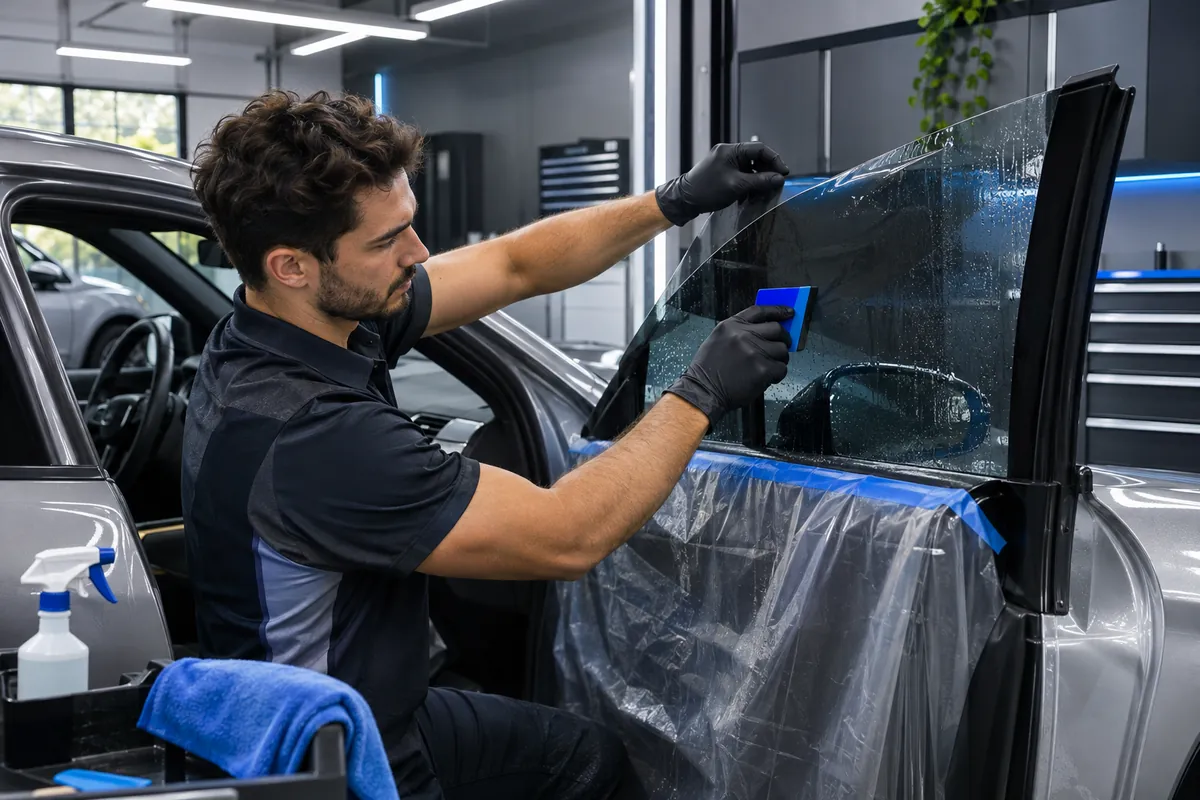
Window film keeps the cabin cooler, blocks most UV rays, cuts glare and adds privacy. Modern ceramic and carbon films do it without the purple fading or interference with phone and GPS signals that older dyed films were known for.
Types of window film
- Dyed: the budget option. Adds privacy, but rejects less heat and can fade over time.
- Carbon: a true black look with better heat rejection, and it won't fade.
- Ceramic: the premium choice. High heat and UV rejection, even in lighter shades, with no signal interference.
South Carolina tint rules (summary)
- Front side windows must let in at least 27% of visible light on all vehicles.
- On cars, the back side and rear windows also have a 27% minimum. SUVs, trucks and vans may generally go darker behind the driver.
- Windshield tint is limited to the strip above the manufacturer's AS-1 line, and film must not be reflective.
- Red, amber and yellow tints are not allowed, and a tinted rear window requires dual side mirrors.
This is a general summary, not legal advice. Medical exemptions exist. Ask your installer to confirm the final measured light transmission for your vehicle, since factory glass already blocks some light.
Updated November 23, 2026. General information; your installer will confirm the exact products, coverage and warranty in writing.